Here are some interesting insights into buying behavior in 2013 of Indian Consumers.

Here is the original article in Hindustan Times.

Here is the original article in Hindustan Times.
As per Telecom Regulatory Authority of India (TRAI) regulation, mobile consumers will be freed from unwarranted calls and SMS from 27th Sept 2011.
This was long overdue - but now has come into effect. Accordingly, the Do Not Disturb registry has been renamed to National Consumer Preference Register. Every telemarker needs to register itself with TRAI (Check registered telemarketers in your district here). Click here to know more about the changes.
Now consumers can choose to block all calls-SMS or choose which calls-SMS they wish to receive. Further, one can change his/her preferences after 7 days compared to 3 months earlier.
People who have already added themselves to DND will be automatically treated to have blocked ALL calls and SMS.
To know your current status, go here and enter your number.
Here is a quick guide to update your preferences via SMS:
You can register your preference(s) for commercial communications by sending an SMS to 1909.
Basically, there are 7 categories of registered telemarketers:
1. Banking/Insurance/Financial products/credit cards,
2. Real Estate,
3. Education,
4. Health,
5. Consumer goods and automobiles,
6. Communication/Broadcasting/Entertainment/IT,
7. Tourism and Leisure.
To partially block, you need to simply send an SMS to 1909 in following format:
START <number of desired category from above>
For example, to receive calls/SMS from Banks and Credit Cards, send following SMS to 1909 -
START 1
You can also send the SMS in following format for multiple categories -
START 1,3,4
To block everything (which is not recommended), send following SMS to 1909 -
START 0
Remember that START 0 supercedes all other options.
Also, remember that the shipment information about items from an eCommerce website are included in category no. 5 i.e. Consumer goods and automobiles. So you may want to receive SMS from this category.
What happens after one sends the SMS?
Basically, you will receive an SMS about confirming the options you have selected. Once you confirm that by sending a confirmation SMS, your preference will be registered and you will get an SMS with a registration number (keep it safe, you may need it).
START x STOP
You can similarly, use STOP to opt put of the whole blocking thing (if you are ok with all the calls and SMS). Just replace START with STOP in above instructions to bring this into effect.
A must read article. Reminded me how the food crisis debate ended up in lobbying for FDI in retail sector. Read to know how govt is failing in the basic job - judicial allocation of resources.
Some excerpts -
In recent years, the financial markets have discovered the huge opportunities presented by agricultural commodities. The consequences are devastating, as speculators drive up food prices and plunge millions of people into poverty. But investors care little about the effects of their deals in the real world.
The problem is particularly glaring in Ethiopia, a country whose name is associated with starvation for many people. Even though 5.7 million Ethiopians are dependent on international food aid, the government sells or leases large tracts of fertile land to foreign investors. They, in turn, export most of the food they produce to other countries. Since 2007, the Ethiopian government has approved 815 foreign-funded agricultural projects. Saudi firms, multinational agricultural companies and British pension funds act as investors. Some 3.6 million hectares of land are up for grabs, much of it in the Gambela region, the proposed site of a national park. Now virgin forest is being cleared to produce food for other countries. Fifty kilometers (31 miles) outside the capital Addis Ababa, Jittu Horticulture, a subsidiary of a Spanish agricultural group, produces 180,000 kilograms (396,000 pounds) of vegetables a week. The produce is exported to the Middle East, supplying multinational oil companies and five-star hotels in Dubai, Qatar, Bahrain and Saudi Arabia. "We bring foreign currency into the country, enabling the government to buy wheat for the hungry," Dutch manager Jans Brins told the Berlin daily newspaper Tagesspiegel. "It's the government's responsibility to feed people who are unable to buy anything for themselves."
According to the UN assessment, what is needed is a reorientation toward a system of agriculture driven by small farmers who grow their crops at the local level, using both sustainable and environmentally compatible methods. The authors argue that through investment, these farmers must be given access to seeds, infrastructure, knowledge and markets -- and thus the opportunity to feed themselves and others. In their view, this is the only way to preserve the natural basis of feeding human beings and fight world hunger.
The original article - Speculating with Lives: How Global Investors Make Money Out of Hunger
Some links which are in tune with what's on my mind...
1. India's Costly Culture of Corruption [Steven Pearlstein in Washington Post]
"These are all reminders that, for all its progress in recent years, India’s economy remains very much an insider’s game. A recent study by two American business school professors confirmed that much of the formal economy continues to be run by a couple dozen family-controlled groups that seem to be in just about every major industry — manufacturing, retail, energy, infrastructure, shipping, construction and telecom."
2. India Inc is not a small crony club [Swaminathan A Aiyer in Times of India]
This is a serious and common criticism, but is mostly wrong. Consider the sensex between 1990 (just before economic liberalization) and today. The sensex comprises the 30 top stock market companies, and the Bombay Stock Exchange keeps changing companies in the list as old giants decline and new ones emerge. If indeed India was dominated by a few oligarchs, the sensex would contain much the same companies today as it did 20 years ago.
3. New India story is about flight of capital [Swapan Dasgupta in Times of India]
From sweetheart deals in telecom and offshore exploration to the ouster of reluctant farmers from their lands, corporate India is being painted the root of all evil. It has become the new juju man—the puppeteer controlling a range of subordinate players ranging from bent bureaucrats to pliant politicians.
The first story above tells what is on mind of everybody in India. Second is a repudiation of the first argument - though a flawed one in my view. The third one, like the second tries to defend big coroporates in India from the recent public outcry - again a meek attempt.
The truth is that India has become a corrupt society. Everyboy knows this. The rich and powerful benefit from it. Everybody else suffers - the biggest loss being the that of opportunity.
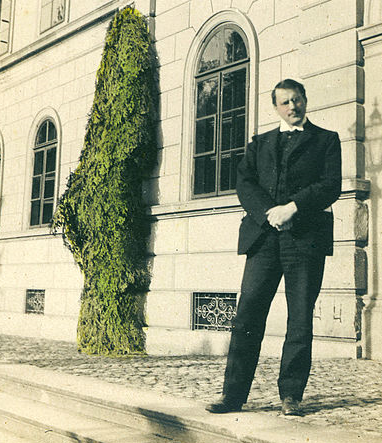
"If people can be educated to see the lowly side of their own natures, it may be hoped that they will also learn to understand and to love their fellow men better. A little less hypocrisy and a little more tolerance toward oneself can only have good results in respect for our neighbors, for we are all too prone to transfer to our fellows the injustice and violence we inflict upon our own natures."
--
I found this quote very apt about the way we deal with the not-so-bright sides of hostorical figures and leaders. Case in point is the intolerent and hasty reactions towards 'failed-to-understand-the-cultural-tones' claims about homoerotic relationship of Mahatma Gandhi.
He is a great inspite of such true-false discoveries. Isn't it?
Can we trace the reason of corruption in Indian society to her culture? Is there any correlation between a highly religious society (Catholics, Hindu) and high levels of corruption?
These are some of the interesting questions asked by Aakar Patel in his piece in Mint today.
Though anybody would agree that corruption is not so simple a phenomenon, there seems to be atleast some truth in what he has hypothised in the article. Ambiguity or complexity or dogmatism in religious code can be a reason which leads to a self-deceptive individual and a similar society.
Actually Fred Riggs, an influential thinker, has a beautiful model which can be more helpful in tracing the causes of corruption. He talked about three types of societies - Agraria (primitive societies where there is little development of structures and functions), Industria (developed societies where there are clearly developed structures and respective functions), and Transitia (a society which is in transition from an agrarian society to an industrial society).
Riggs's model was based on his observations about the third world - first world classification, to which he later added 'Developing World' - typified by a Transitia society.
These societies which are in transition, in some way or the other, are more susceptible to corruption. These societies are characterized by three qualities - heterogeneity (i.e. simultaneous existence of traditional as well as modern viewpoints and structures), formalism (i.e. there exists a difference between what is formally prescribed and what is actually followed.), and overlapping (i.e. modern and traditional methods/practices/structures/behaviours overlap. E.g. A court takes cognizance of a case only when there are riots).
From these characteristics of the prismatic society, it is clear why corruption is a practice in such societies. We can also see a clear picture of Indian society in the prismatic description.
Let's hope as the Indian society evolves, as we are more transparent about ourselves, there will be a change.
Here is the link to my post on Indian media facing a dilemma. It is published on blog of MediaNext - my company.
In spite of all the controversies that preceded the Delhi Commonwealth Games, I must say that I enjoyed every moment during the last 11 days. Sometimes I even wondered where are the falling roofs? Where are the clogged toilets? What was on screen was pure sports, pure joy. Isn't it these sports moments which shape the pride of a nation - the stock index of happiness and pride moving up or down with every medal that is won or lost?
And, all these controversies went completely into oblivion when India put a stellar performance at the Games. In India, we are raised to believe that there are only 2 games at which India can win - Cricket, and then Cricket (- add corruption and babies-making to it, might say some mockingly). So, one never expects an Indian to win in other games, more so in athletics. No way! No way, unless he or she is raised, bred or trained from childhood in US!
But in 2010, India did win some medals (a spectacular 1-2-3 in women's discuss throw, and a gold medal in 4X400 relay - women's, and some more).
In this context, I came across the story of the day - a story of a hero whose connection with India only a few might be knowing. His name was Otto Peltzer - a German athlete who made tremendous impact on India athletics.
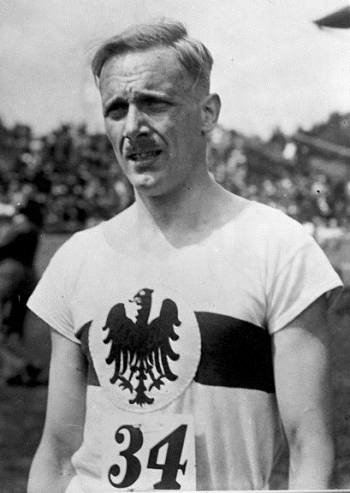
Here is his story from Australian newspaper the Age -
J.S.Saini, the 83-year-old track and field guru who for two decades was India's chief national coach, called him the father figure of Indian athletics. Norris Pritam, who ran under Peltzer as a teenager, said no one had made as big an impact on Indian athletics as the man they knew simply as ''Doc'', and no one ever would.
His story is a moving story, in the sense that he is a forgotten hero in India. Let's hope that his efforts will find recognition as India continues on the path of more sporting glory.
Here is the link to the story.
Here is the Wikipedia entry for Otto Peltzer.
Social/cultural sentiments is a funny and controversial phenomenon. You never know whose sentiments are you hurting with even a casual comment or remark. And in India, the controversies arising out of sentiment-hurting are as widespread as are the types of religions, castes, practices, languages, dialects, mores. When the sentiments of people and groups are ever alert for catching anything pointed at them, it is rare to hear sane voices amongst the din. But I was surprised (and glad) to see this piece in Mint newspaper, by Shubha Mudgal - noted vocalist and a good writer too. Read this opening - Those Western Values For a nation with the wealth of art forms and musical genres that India has, it has never shown too much concern for the preservation of its artistic heritage. Or for creating channels of dissemination for the traditional art and music that has survived against the greatest odds. She writes further - Not for a moment am I considering joining hands with the brigades of buffoons and goons who—in the name of upholding Indian culture—bash people up in parks for holding hands or indulging in a bit of necking. I am merely suggesting that it might be a good idea to emulate paschimi sabhyatanow and again, especially when it comes to the organized manner in which the West preserves musical and artistic heritage. Here, she is referring to the work Smithsonian Institute is doing for preserving vocal traditions not only from USA but from all over the world. She was surprised to find a 1938 collection of Marathi songs - collected by a dutch fellow Beck, on the site. Now this is what preservation of culture is.
2 Eye-opener news -
India’s Bourses Have Hundreds of Satyams
There're hundreds of Satyams listed on the stock exchanges. Good coporate governance seems to be last in the priority list as over 1,200 companies listed on the Bombay Stock Exchange (^BSESN : 9156.31 -250.16
) have yet again failed to comply with corporate governance norms for the quarter ended September 2008.
"In terms of Clause 49 of the Listing Agreement, 1,228 companies have not submitted corporate governance report," the BSE says. The exchange has been putting out almost the same number of companies in the list of those of violating Clause 49, quarter after quarter. The Indian Express had earlier reported about this menace but the exchanges and the regulator are yet to tackle the issue. (Link to the story)
Wipro Shares Tumble on World Bank Contract Ban
Shares in India's No 3 software company, Wipro Ltd (WIPRO.NS : 226.85 +-24.1
) fell more than 12 percent on Monday after the outsourcer said the World Bank had barred the company from its direct contracts, citing a conflict of interest.
The decision, taken by the World Bank in June 2007 and effective until 2011, was being announced now under revised disclosure policies, Wipro said.
The World Bank said in a separate statement from Washington that the ban was for "improper benefits to bank staff". It had also earlier barred Satyam Computer Services (SATYAM.BO : 36.15 +12.3
(Link to the story)
Here is the text of an open letter to India’s PM, which appeared probably in Times of India. Currently it is doing rounds of emails. Only part that I disagree in the letter is about corruption in Maharashtra – no, it is not more than or even equal to what is there in some other states in India.
Read it -
LETTER TO PRIME MINISTER
Dear Mr. Prime minister
I am a typical mouse from Mumbai. In the local train compartment which has capacity of 100 persons, I travel with 500 more mouse. Mouse at least squeak but we don't even do that.
Today I heard your speech. In which you said 'NO BODY WOULD BE SPARED'. I would like to remind you that fourteen years has passed since serial bomb blast in Mumbai took place. Dawood was the main conspirator. Till today he is not caught. All our bolywood actors, our builders, our Gutka king meets him but your Government can not catch him. Reason is simple; all your ministers are hand in glove with him. If any attempt is made to catch him everybody will be exposed. Your statement 'NOBODY WOULD BE SPARED' is nothing but a cruel joke on this unfortunate people of India. Enough is enough. As such after seeing terrorist attack carried out by about a dozen young boys I realize that if same thing continues days are not away when terrorist will attack by air, destroy our nuclear reactor and there will be one more Hiroshima.
We the people are left with only one mantra. Womb to Bomb to Tomb. You promised Mumbaikar Shanghai what you have given us is Jalianwala Baug.
Today only your home minister resigned. What took you so long to kick out this joker? Only reason was that he was loyal to Gandhi family. Loyalty to Gandhi family is more important than blood of innocent people, isn't it?
I am born and bought up in Mumbai for last fifty eight years. Believe me corruption in Maharashtra is worse than that in Bihar. Look at all the politician, Sharad Pawar, Chagan Bhujbal, Narayan Rane, Bal Thackray , Gopinath Munde, Raj Thackray, Vilasrao Deshmukh all are rolling in money. Vilasrao Deshmukh is one of the worst Chief minister I have seen. His only business is to increase the FSI every other day, make money and send it to Delhi so Congress can fight next election. Now the clown has found new way and will increase FSI for fisherman so they can build concrete house right on sea shore. Next time terrorist can comfortably live in those house , enjoy the beauty of sea and then attack the Mumbai at their will.
Recently I had to purchase house in Mumbai. I met about two dozen builders. Everybody wanted about 30% in black. A common person like me knows this and with all your intelligent agency & CBI you and your finance minister are not aware of it. Where all the black money goes? To the underworld isn't it? Our politicians take help of these goondas to vacate people by force. I myself was victim of it. If you have time please come to me, I will tell you everything.
If this has been land of fools, idiots then I would not have ever cared to write you this letter. Just see the tragedy, on one side we are reaching moon, people are so intelligent and on other side you politician has converted nectar into deadly poison. I am everything Hindu, Muslim, Christian, Schedule caste, OBC, Muslim OBC, Christian Schedule caste, Creamy Schedule caste only what I am not is INDIAN. You politician have raped every part of mother India by your policy of divide and rule.
Take example of former president Abdul Kalam. Such a intelligent person, such a fine human being. You politician didn't even spare him. Your party along with opposition joined the hands, because politician feels they are supreme and there is no place for good person.
Dear Mr Prime minister you are one of the most intelligent person, most learned person. Just wake up, be a real SARDAR. First and foremost expose all selfish politician. Ask Swiss bank to give name of all Indian account holder. Give reins of CBI to independent agency. Let them find wolf among us. There will be political upheaval but that will better than dance of death which we are witnessing every day. Just give us ambient where we can work honestly and without fear. Let there be rule of law. Everything else will be taken care of.
Choice is yours Mr. Prime Minister. Do you want to be lead by one person or you want to lead the nation of 100 Crore people?

The shameful attacks that were carried out on Mumbai for last 2 days are finally reached to the end now. With death of more than 150 common people, some best cops & commandos, and some foreign nationals, these attacks have made wounds on hearts of billions of Indians.
A few things that I noted during these attacks are -
A window to web on Mumbai Terror attacks:
Some of the best, original, and least seen photo shows here, here, here, here, here, here, here & here from local media
Some good content from around the globe here [one of the best photo shows], here, and here, and here
NDTV Page on Attacks with videos and more
I always believe in the fact that there is always something more than what meets your eye. And this has been proved right for me on every occasion.
Take case of Nano – the cheapest car from India’s Tata group. Tatas promise to deliver the car at INR 100,000 (i.e. little more than $ 2000). Mind well – this is a promise, so the car will carry the INR 1 lac tag notwithstanding any external factor.

Initially Nano was to be produced in the eastern Indian state of West Bengal which is ruled by communist party for decades. Surprisingly, the opposition to the Nano project came from not the communists but their opposition – Trinmool Congress leader Mamata Banerjee. She agitated so strongly against take-over of land by Tatas that Tatas had to pull put from the current location – some 50 km away from Kolkata.
The utility of Nano is beyond doubt. A 1 lac car puts mobility within reach for thousands of small-town Indians thereby giving a strong impetus to economy. Forceful agitation by Mamata Banerjee (her supporters sealed the Nano plant area, making normal production impossible) created a roadblock for Nano which by now has become a point of pride for Indians. This act generated widespread anger against the tactics of Mamata and her actions were said to be politically inspired. Incidentally, Tats had to pull out from W. Bengal and they have now opted for Gujarat for setting up the Nano plant. Read these media reports here, here, and here.
Though I am fully for the Nano and believe that political sabotage of any project is worse rather than good, I always felt that there must something more than what meets the eye. For example, no media report was talking @ Tats’s deal with W. Bengal government. No facts were being presented anywhere.
Today, I came across what I was searching for many days – some facts from other side of fence. I am not drawing any conclusions here; I just want to point out some facts presented in an article. Here is an excerpt (read original article here) -
“The cash starved WB government has given a Rs.200 crore loan to Tata Motors at – yes – at 1% interest. The first installment will be repaid in the 21st year of the project. Does a group that paid Rs 35,000 crore or so to acquire the British steel company Corus need a Rs.200 crore loan at 1% interest? Forget that. By the time the first installment is due, Tata Motors would have earned close to Rs.2,000 crore in interest income by investing that money in a fixed deposit.
Tata Motors will pay a lease of Rs.1 crore per year on 647 odd acres of land for the first 30 years of the 90 year old lease. That is less than Rs.1,300 per acre in commercial land, less than 50 kilometers from Kolkata. Even poor middle class souls like you and me pay a lease of Rs.1,80,000 per year for a 1,000 square feet house far from the heart of the city.
The Nano project will get power at Rs.3 per KwH; the current rate in Bengal is Rs.4.15. If rates go up by more than 25 paise per Kwh in five years, the government will refund Tata Motors. You and me are already paying close to Rs.6 per unit for electricity. For every Nano sold in Bengal, the state will de facto refund the VAT and sales tax collected on each sale of Nano.”
If these facts are to be taken as an indicator to the kind of deals state governments are entering into, then it is the state’s taxpayer who is going to bear the burden of car’s cost-price difference.
A 1 lac car, then really is not so attractive an idea that it is without such facts.

Financial Crisis As Explained to My 14 Year Old Sister - Kevin Nguyen
Kevin: I’m getting to that. Let’s say that the Charizard is worth $50, so in case you decide to not return my money, at least I’ll have something that’s worth what I loaned out.
Olivia: Okay.
Kevin: But one day, people realize that Pokémon is stupid and everyone decides that the cards are overvalued. That’s right—everybody turned twelve on the same day! Now your Charizard is only worth, say, $25.
Four Stages of Global Financial Crisis – Ajay Shah
The first place to focus on was US housing construction. US housing was clearly in stratospheric territory. Once the US Fed started raising rates, and Mortgage Equity Withdrawal became less important, trouble was going to come about in US home construction. In this period, I watched the DJ US Home Construction Index.
Can a US Style Financial Crunch Happen In India? – Prof. Jayant Varma
Another way of looking at the Indian situation comes from reading Ellis’ paper “The housing meltdown: Why did it happen in the United States?”, BIS Working Paper 259. Many of the factors mentioned by Ellis are equally applicable to India:
- The supply elasticity of real estate construction has been very high in the current boom (compared to the past) and this supply overhang has the potential to deepen the correction that is required.
Rationality of Panic – Steve Coll in New Yorker
People don’t generally panic in the sunshine. They panic in the dark. And we are in the dark about what assets and liabilities are truly held in what has been properly labeled the “shadow banking system”
Tata also doesn’t seem all that concerned about instant profits – just as he doesn’t expect instant returns from the tiny Nano car he hopes to launch by year’s end. Instead, he is expected to use the brands and their U.K. plants, executives and labor to help build Tata Motors, which had $7.2 billion sales in fiscal 2007, into a global car company. He’s been on this mission for several years, buying Britain’s Tetley Tea in 2000, a Korea-based Daewoo truck plant in 2004 and steel giant Corus (previously British Steel) last year. Ratan Tata’s hands-off ownership could win him crucial support as he tries to fold the Jaguar and Land Rover brands into Tata. Mark Norbom, the head of General Electric in Japan, wrote recently in the Financial Times about the importance of the “soft side” of a takeover deal. The “look in the eyes that (the buying) company is worthy” has special value, said Norbom, and is something that “does not come naturally to the typical western-trained dealmaker.” Well, it seems to come naturally to Tata and his people. It was evident in the Corus deal, and it seems to be at work again in their Jaguar and Land-Rover plans. This could, of course, mean that Tata is seen - especially by British trade union leaders - as a soft option who will let workforces carry on as usual. Land Rover has had three years of record sales for Tata to build on. But there’s no telling how long the status quo can last, especially if demand slackens in the United States and elsewhere and Ratan Tata has to institute cutbacks at the luxury car makers.
...It brings up questions of inequality and class envy — notwithstanding that India's score on the Gini coefficient, the measure used by economists for inequality, stands at a moderate 0.33. It's far more egalitarian than comparable economies in BRIC — Russia scores 0.40, China 0.45, and Brazil is off the charts at 0.54.
India does well even by the standards of developed economies, scoring the same as Canada and Belgium and better than the United States (0.41). Looked at in this frame inequality is not India's most pressing problem, poverty indubitably scores higher...
The moment the economy does well, it becomes incumbent on every one of us to develop a bad conscience. Which is why the prime minister who, in his capacity as finance minister in a previous government had launched India's economic reforms, succumbed to the established political wisdom of the day and called for capping CEO salaries to stop the poor from being discontented. The hackneyed ideology of trusteeship evidently dies hard — poverty is a constant, but the rich can help by hiding their riches better...
Inequality could be the hallmark of dynamic societies undergoing rapid economic growth, but that's better than wallowing in the stagnation of universal poverty. We celebrate our IITs, yet see merit as an elitist principle. Rather than obsess about inequality of outcomes India would do better if it focused, instead, on opportunity. Every Indian should have the means to fulfil her aspirations. Rather than pushing for reservations at higher levels, it's much better to provide universal access to infrastructure and education...
...China is more unequal than India, but far more successful in addressing poverty than India...
In spite of some differences of varying extent in the association or separation, one fact that remains true about the governance set up in a democracy, that there are 3 basic functions of the State and these are Legislation, execution and judicature. There are 3 arms of state in a democracy, which performs these functions in – legislature legislates, executive executes and judiciary decides the legality within the ambit of laws made by legislature. The legislature makes the laws because it represents the will of the people. People elect their representatives in the elections and send the winners to the parliaments to protect their interests, on their behalf. Thus works the democracy. However, do the legislatures truly represent the people who mandate them? Theoretically yes, but on ground, the answer is a big no.
How can a person, whom I don't meet for the whole term of legislature said to be representing my aspirations? I would say that representing the aspirations of a few crores of voters is just not possible for a single member of parliament, more so in a highly stratified and fractured society like India. Further, here the system is 'first past the post' – he who gets highest number of votes, wins. So you can have a candidate garnering even 20 percent of votes and winning the election. Actually, had there been an option of 'None of the Above' in the voting list, I am sure that those who mark on this option would have been highest in number. Further do the interests of the representative as a politician, align with his interests as a legislature? Or, do they even align with my interests as a voter? A politician would certainly be a election oriented person, because there are no rewards for remaining politician. The returns, however, pour cats and dogs, once you win the election. Further, the unmanageable number of voters in a constituency means that rather than doing the hard work of winning heart of each voter, I would rather use the short cuts to win the elections. Here, the aspirations of people and representative nature of polity – both are compromised.
Now, if this is the situation, then why citizens should be bound by the laws made by a parliament which is not representative in true sense of the term?
What can be the solution to this issue?
